

Zero-rated education data may cost telcos N180bn yearly
By Patience Ikpeme
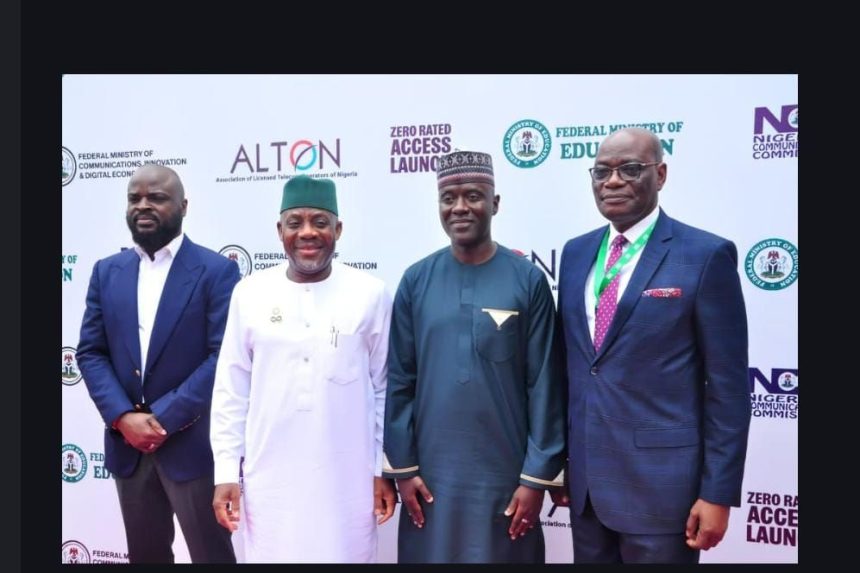
The Nigerian Communications Commission’s (NCC) plan to provide free access to approved educational platforms could cost mobile network operators about N15 billion monthly, or an estimated N180 billion annually, if the initiative eventually serves five million students.
The cost estimate emerged at the launch of the NCC’s Zero-Rated Data Access to Educational Platforms and Content initiative on Thursday, as the commission said participating telecom operators would provide eligible learners with up to 100 megabytes of data daily at no charge.
Under the arrangement, known as the Operator-Sponsored Model, learners would be able to access approved educational websites and digital learning content without paying for the data used.
The Executive Vice Chairman of the NCC, Dr. Aminu Maida, said the financial commitment by operators should be viewed as an investment in Nigeria’s human capital rather than simply an additional cost to the telecommunications industry.
Maida said greater access to online education could produce a more skilled and productive population, which would eventually create new opportunities for the telecommunications sector and the wider economy.
“If the economy becomes more productive through these people who access these educational platforms, they are the future innovators in Nigeria,” he said.
“Making them more productive is actually going to create more opportunities for the sector to grow.”
The NCC boss explained that the 100MB daily limit was deliberately introduced to make the programme sustainable while the commission studies how learners use the approved platforms.
At the maximum daily allowance, a learner could receive about 3GB of zero-rated data in a month. If millions of students participate, the resulting increase in network traffic could require operators to provide additional bandwidth and make investments in network capacity and content-delivery infrastructure.
Industry stakeholders said the projected N15 billion monthly cost reflects both the direct value of data provided free to users and the technical requirements associated with handling the additional traffic.
The impact could be more significant where educational content involves audio and video, which require considerably more data than reading materials and other text-based courses.
Maida said the initiative represented a substantial contribution by the telecommunications industry to the country’s future, particularly when the benefit was considered across millions of learners over several years.
“One hundred megabytes of data might sound a little, but when you look at it over a month and over a year, and cumulatively over the millions of learners and students that are going to access it, it’s really a significant investment by the industry towards the future of this country,” he said.
He linked the programme to President Bola Tinubu’s ambition of building a $1 trillion Nigerian economy, arguing that developing the skills of young Nigerians would be important to achieving that objective.
The commission is also putting measures in place to prevent the programme from becoming unnecessarily expensive.
The Director of Policy, Competition and Economic Analysis at the NCC, Ayuba Shuaibu, said the commission and the Federal Ministry of Education would jointly determine which educational platforms qualify for the zero-rating arrangement.
The approved platforms would also be expected to reduce unnecessary data consumption by improving the way their content is delivered. Such measures could include reducing advertisements and using lighter versions of content where possible.
Shuaibu said the daily 100MB ceiling was part of the commission’s effort to balance access to digital education with the need to keep the scheme financially viable.
“The idea of a cap of 100 megabytes is also towards ensuring sustainability,” he said.
The NCC plans to monitor the programme and conduct periodic reviews to determine whether the current model is achieving its objectives.
Among the areas to be tracked are the number of learners using the platforms, the volume of data consumed, availability and quality of the services, and complaints from users.
The findings would help the commission determine whether the operator-sponsored model should be expanded, modified or replaced with another funding arrangement.
Telecommunications industry stakeholders have suggested that government support could become necessary if the scheme is expanded significantly. Possible options include tax incentives, public subsidies, public-private partnerships and corporate social responsibility contributions.
Other measures could include agreements among operators to share network capacity and a phased expansion of the programme, beginning with priority groups or areas with greater educational needs.
However, analysts have cautioned that the N15 billion monthly projection should not be regarded as a fixed cost because the eventual expenditure would depend heavily on how students use the platforms and the type of educational materials they consume.
Text, reading and PDF materials generally require much less data than audio and video lessons. The statement put estimated consumption for reading and PDF materials at about 5MB to 15MB per hour, compared with 10MB to 25MB for text-based platforms and 30MB to 60MB for audio lessons.
An industry analyst, who spoke on condition of anonymity, said changes in students’ usage patterns or the type of content available could significantly alter the final cost to operators.
The Minister of Education, Dr. Tunji Alausa, welcomed the initiative but called for close monitoring to ensure that the money and network resources committed to the programme produce measurable educational benefits.
He said providing free access to approved digital learning platforms could make education more accessible, particularly for students from low-income families who may struggle to afford regular internet access.
“By enabling learners to access approved educational platforms and content without incurring data charges, this initiative will expand educational opportunities for students, particularly those from low-income households,” Alausa said.
He added: “We must ensure the programme is efficient, reaches the vulnerable and delivers measurable learning gains.”
The NCC said it would begin gathering data immediately to assess the educational, technical and financial performance of the initiative.
The assessment is expected to provide evidence on whether the estimated N15 billion monthly industry commitment is producing sufficient benefits to justify continuation of the operator-sponsored arrangement or whether other funding models would be required as the programme grows.