

Open Space Launches Ethical Finance Products
By Patience Ikpeme
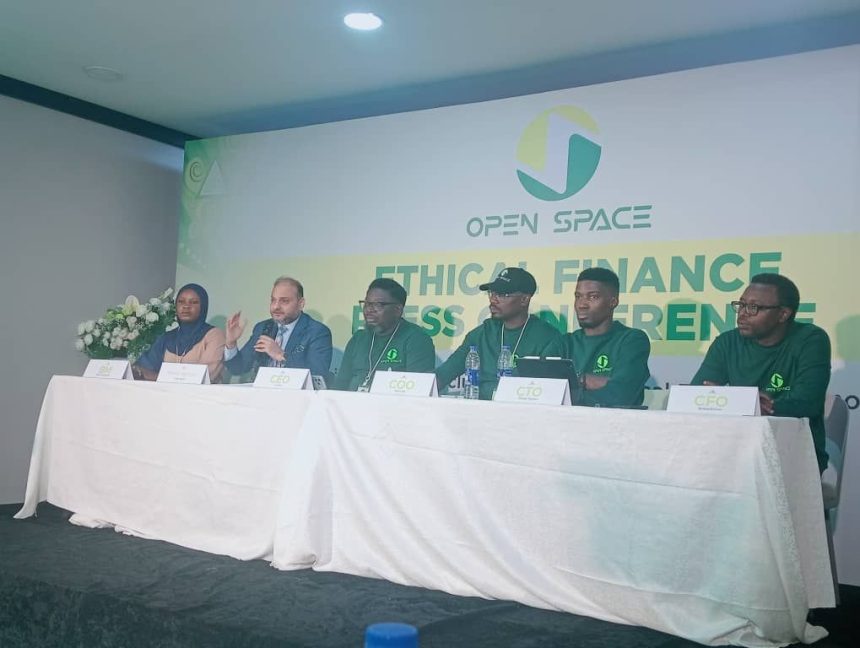
Open Space Financial Services has launched a new range of ethical finance products designed to expand access to transparent, asset-backed and non-interest financing for individuals and businesses across Nigeria.
The company said the products would connect financing more closely with real economic activities while helping to widen financial inclusion, particularly for people and businesses that have traditionally faced difficulties accessing suitable financial services.
The new products were unveiled in Abuja at a press conference themed, “Advancing Financial Inclusion through Ethical Finance and Innovation.”
Chief Executive Officer of Open Space Financial Services, Titus Adakole Ikeh, said the company was established to build a broader financial ecosystem capable of serving Nigerians who remain underserved or excluded from existing financial services.
According to him, Open Space was not created simply to add another digital financial platform to the growing number of players in the sector, but to develop financial solutions that respond more directly to the needs of its users.
“We did not set out to build another platform simply to be numbered among the many financial platforms that already exist,” Ikeh said.
“We set out to build an ecosystem that can make financial services more accessible, intelligent, relevant and meaningful to people, particularly those who have historically remained underserved or excluded.”
He said the launch of the Ethical Finance products represented a shift in the company’s approach to financial services, with greater attention being given to how financing could contribute to economic participation and shared prosperity.
“The real measure of Open Space will never be the number of products we have on our platform,” Ikeh said. “It will be the number of lives we are able to positively influence through those products.”
The new offering consists of four major financing and investment structures: Murabaha, Ijarah, Diminishing Musharakah and Mudaraba.
Murabaha is an asset purchase and resale arrangement under which the cost of an asset and the profit to be earned by the financier are disclosed to the customer. Rather than providing a conventional interest-based loan, the financier purchases the asset and sells it to the customer at an agreed price.
Ijarah provides a lease-based financing option, particularly for productive assets. Under the arrangement, customers can access the use of an asset through leasing terms instead of obtaining a conventional interest-bearing loan to purchase it outright.
Diminishing Musharakah is based on shared ownership. Under the structure, the financier and customer jointly own an asset, while the customer gradually purchases the financier’s share until full ownership is transferred to the customer.
Mudaraba, on the other hand, is a savings and investment arrangement based on profit sharing. It provides a structure under which funds can be invested in Shariah-compliant activities, with returns distributed according to an agreed arrangement rather than a predetermined interest payment.
Shariah adviser to Open Space Financial Services, Zubair Mughal, said the ethical finance model was intended to encourage greater fairness and transparency in financial transactions.
“Ethical Finance challenges us to think differently about what financial value means and how it should be created,” Mughal said.
The company said the products were designed around the principle that financial services should have a closer link with real economic activities. This means financing is structured around identifiable assets, leases, ownership arrangements or investments rather than being based solely on the lending of money for interest.
Open Space said the approach could also provide an alternative for Nigerians seeking financing arrangements that are transparent and connected to productive economic activities.
The launch comes as financial inclusion remains an important issue in Nigeria, where access to appropriate and affordable financial services continues to affect individuals, small businesses and other underserved groups.
For many small businesses, access to finance remains a major challenge, particularly where conventional borrowing costs are considered too high or where available products do not adequately match their business needs. The company said its ethical finance proposition was developed partly in response to this gap.
Open Space said its focus would extend beyond simply providing financial transactions to creating opportunities that can support inclusion, wealth creation and practical access to financing.
The company also positioned the new products as part of a broader financial ecosystem intended to make financial services more relevant to users, rather than limiting its role to facilitating payments or other routine financial transactions.
Ikeh said the company’s success would ultimately be measured by the impact its products have on the people and businesses using them.
His comments suggest that Open Space intends to judge the performance of its financial platform not only by customer numbers or the volume of transactions processed, but also by the extent to which its products help users participate more effectively in economic activity.
The company said the ethical finance products would be available to both individuals and businesses, potentially giving customers access to different financing structures depending on their needs.
For individuals, the products could provide alternative ways of acquiring assets, saving and investing, while businesses could use asset-based and lease financing structures to obtain productive equipment and other resources required for their operations.
The company said the underlying principle was to make financing more transparent and closely tied to identifiable economic value.
With Murabaha, Ijarah and Diminishing Musharakah providing different routes to asset acquisition and use, while Mudaraba offers a profit-sharing savings and investment structure, Open Space said customers would have a range of options from which to choose.
The company said the products were also intended to contribute to wealth creation by giving customers access to financial arrangements that can support productive activities.
The introduction of ethical finance products adds another dimension to Nigeria’s evolving financial services industry, where technology and new business models are increasingly being used to reach people who have traditionally been left outside formal financial systems.
Open Space said it would continue to develop its financial ecosystem around accessibility, transparency and relevance, with the broader objective of ensuring that financial services can serve a wider section of the Nigerian population.
The company said the new Ethical Finance proposition was ultimately about using financial services as a tool for broader economic participation.
For Open Space, the immediate challenge will be to translate the principles behind the products into financing that is accessible, understandable and useful to ordinary Nigerians and businesses.
The company said its long-term measure of success would therefore be the positive difference its products make in the lives of customers, rather than simply the size of its product portfolio.


