

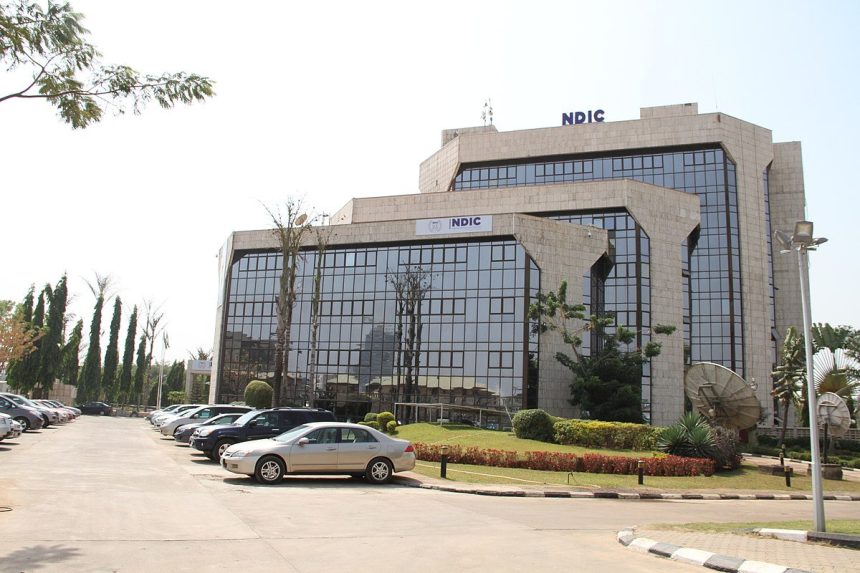
NDIC Begins Liquidation, Pays Insured Deposits of Aso, Union Homes
By Patience Ikpeme
The Nigeria Deposit Insurance Corporation (NDIC) has commenced the liquidation process for Aso Savings and Loans Plc and Union Homes Savings and Loans Plc following the revocation of their operating licences by the Central Bank of Nigeria (CBN) on December 15, 2025.
The NDIC was appointed as liquidator of the defunct mortgage banks in line with the provisions of Section 12(2) of the Banks and Other Financial Institutions Act (BOFIA) 2020, marking the formal takeover of the institutions’ affairs by the deposit insurer.
In a public notice issued on Tuesday, the Corporation said it had begun verification and payment of insured deposits to customers of the closed banks in accordance with Sections 55(1) and (2) of the NDIC Act 2023.
According to the NDIC, depositors are entitled to receive insured deposits of up to a maximum of ₦2 million per depositor. The payment, it said, will be made using depositors’ Bank Verification Numbers (BVN) to trace their alternate bank accounts, into which the insured sums will be automatically credited.
“Depositors with balances in excess of ₦2,000,000 will be paid the initial insured amount, while the outstanding balances will be settled as liquidation dividends upon the realisation of the assets and recovery of debts owed to the failed banks,” the Corporation said.
The NDIC explained that it would immediately commence the sale of the banks’ assets and intensify the recovery of outstanding loans in order to speed up the payment of uninsured deposits to customers.
To ensure a smooth process, the Corporation said depositors could submit their claims either online or through physical verification. For online submission, depositors are expected to complete the digital claims form on the NDIC claims portal, while those opting for physical verification were advised to visit the nearest branch of the closed banks between Tuesday, December 16, 2025 and Thursday, December 30, 2025, where NDIC officials would be on ground to attend to them.
For verification and payment of insured sums, the NDIC said depositors would be required to present proof of account ownership, a valid means of identification such as a driver’s licence, permanent voter’s card or national identity card, as well as details of their alternate bank account and BVN.
The Corporation also advised depositors to activate transaction alerts on their alternate bank accounts to enable them receive notifications of payments. It added that customers without active alerts could confirm credits through their banks’ USSD codes or by visiting bank branches.
Beyond depositors, the NDIC said creditors of the closed banks are required to submit their claims either online or at the nearest branch of the banks within the same verification period. It explained that payment of liquidation dividends to creditors would commence only after all depositors have been fully paid, in line with the provisions of the law.
On staff-related obligations, the Corporation said deposits of employees of the defunct banks would be paid after all depositors have been settled, from the proceeds of asset sales as liquidation dividends. Shareholders, it added, would be paid thereafter from further realisation of assets and recovery of outstanding debts.
The NDIC also issued a directive to debtors of the failed banks, urging them to visit the Corporation’s Asset Management Department to regularise and fully settle their outstanding loan obligations.
Reassuring the public, the NDIC said the liquidation of the two mortgage banks does not pose a threat to the wider banking system. “The NDIC wishes to assure the entire banking public of its commitment to the continued safety of depositors’ funds in all licensed banks,” the Corporation stated.
It added that customers are encouraged to continue their banking activities with confidence, noting that banks whose licences have not been revoked remain safe and sound.
The Corporation said it remains available to provide further clarification to depositors and other stakeholders through its Claims Resolution Department and official communication channels.