

CBN Cuts Interest Rate to 27% Amid Sustained Disinflation
By Patience Ikpeme

The Monetary Policy Committee (MPC) of the Central Bank of Nigeria (CBN) has, for the first time in two years, reduced the Monetary Policy Rate (MPR) by 50 basis points to 27 percent from 27.5 percent. This decision follows five consecutive months of decreasing inflation figures.
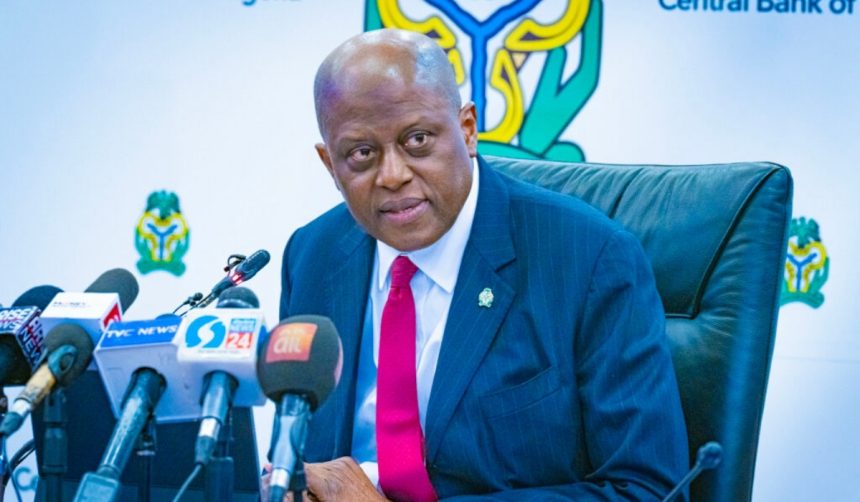
Addressing journalists at the conclusion of the September 2025 MPC meeting in Abuja, the CBN Governor, Mr. Olayemi Cardoso, announced the new monetary policy parameters. The committee’s decisions include reducing the MPR to 27.00 percent, adjusting the Standing Facilities corridor to +250/-250 basis points, and adjusting the Cash Reserve Ratio (CRR) for commercial banks to 45 percent while keeping the CRR for merchant banks at 16 percent. The Liquidity Ratio was left unchanged at 30.00 percent.
The committee also introduced a 75 percent CRR on non-Treasury Single Account (TSA) public sector deposits. This new measure means that for every ₦100 billion a ministry or agency holds in a commercial bank outside the TSA, the bank must deposit ₦75 billion with the CBN, leaving only ₦25 billion for lending. This is intended to strengthen monetary control, help mop up excess liquidity, and support the TSA policy by making it less attractive for banks and government agencies to hold funds outside the central account.
This new directive could lead to reduced liquidity in banks, which might tighten credit availability for private businesses. However, the CBN believes it will help curb inflation by sterilizing more funds. The move could also put pressure on banks, possibly prompting them to mobilize more private deposits or increase interest rates on loans, while promoting fiscal discipline by encouraging fuller compliance with the TSA.
Cardoso said that the decision to lower the MPR was based on several factors. “The Committee’s decision to lower the monetary policy rate was predicated on the sustained disinflation recorded in the past five months, projections of declining inflation for the rest of 2025 and the need to support economic recovery efforts,” he said.
He added that the MPC also adjusted the Standing Facilities corridor to improve the efficiency of the interbank market and strengthen monetary policy transmission, while the new 75% CRR on non-TSA public sector deposits was introduced for enhanced liquidity management.
Members of the MPC also acknowledged the significant progress in the ongoing bank recapitalization exercise, noting that fourteen (14) banks have fully met the new capital requirement. They urged the bank to continue implementing policies and initiatives that would ensure the successful completion of the ongoing recapitalization exercise.
The committee also noted the successful termination of forbearance measures and waivers on single obligors, which has helped to promote transparency, risk management, and long-term financial stability in the banking system. The MPC gave the public its assurance that the impact of the removal of forbearance is transitory and does not pose any threat to the soundness and stability of the banking system.
On Nigeria’s external reserves, Cardoso said, “Gross external reserves remained robust at US$43.05 billion on September 11, 2025, compared with US$40.51 billion at end-July 2025 with an import cover of 8.28 months. Similarly, the Q2 2025 current account balance recorded a significant surplus of US$5.28 billion compared with US$2.85 billion in Q1 2025.”
He also spoke about the consistent upward trajectory of the reserves, noting, “It has been on an upward trajectory. And honestly, as far as I can see, the measures that we’ve used to get to where we’ve gotten to and to be able to talk about a foreign reserves position that was the highest since 2019, we will continue to deploy.”
When asked about ensuring a durable disinflationary trend, particularly with 2026 being a pre-election year, the Governor said, “our goal is for single digits. That’s our goal. And that is something that we are very resolute on. And we will not stop until we get there. So I want to make that abundantly clear. That is where we are headed to.”
He also spoke about the collaboration between the CBN and the Ministry of Finance, describing it as a joint effort. He said, “And there I say and emphasize that the gains we have made so far with respect to inflation coming down, moderation in prices, stability in the system has been a joint effort.”
On the future outlook, Cardoso said that “projections suggest a sustained disinflation over the coming months, driven by the lagged effects of previous rate hikes, continued stability in the foreign exchange market, and decline in the price of PMS. Furthermore, the onset of the harvest season is expected to increase local food supply, moderate food prices and contribute to the overall decline in inflation.”


