

FG to Commence 2025 Budget Implementation by End of September
By Patience Ikpeme

The Federal Government has disclosed that the implementation of the ₦54.99 trillion 2025 national budget, tagged the “Budget of Restoration,” will commence by the end of September.
This development comes as the execution of the 2024 budget draws to a close.
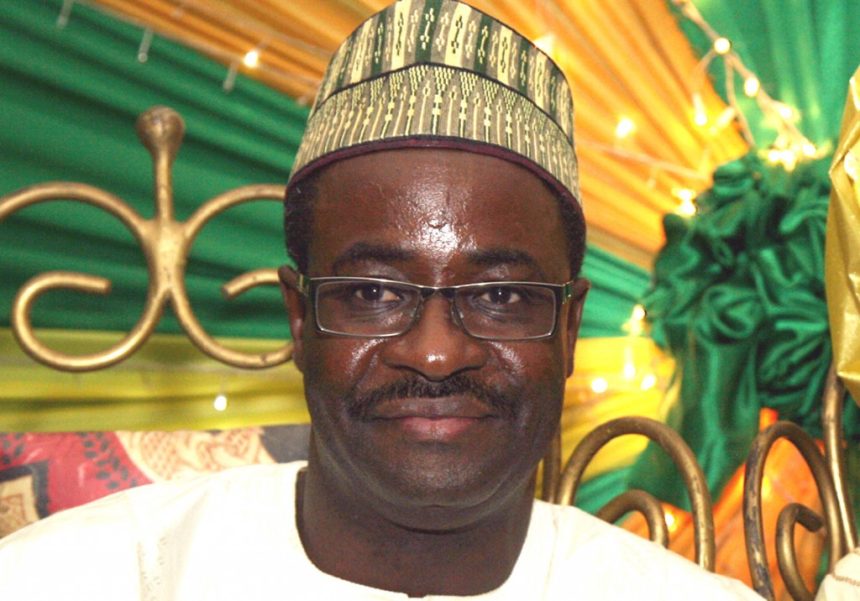
The disclosure was made by the Director-General of the Budget Office of the Federation, Dr. Tanimu Yakubu, at the 3rd Quarter Ministerial Stakeholders and Citizens Engagement Forum, hosted by the Ministry of Budget and National Planning in Abuja.
Dr. Yakubu stated that effective implementation and prudent fiscal management would be essential for the budget’s success, which is designed to stimulate economic growth, enhance public services, and drive investments in key sectors.
Dr. Yakubu also spoke about the importance of citizen involvement in the budgetary process, describing Nigerians as “the ultimate owners of public resources.” He listed various initiatives designed to foster this involvement, including translating budget documents into local languages, simplifying budget content, and empowering communities to hold the government accountable.
The Director General also outlined challenges facing Nigeria’s public finance system, such as setting realistic revenue targets, especially in the oil sector, and addressing the fiscal implications of the Petroleum Industry Act (PIA). He further mentioned the need to improve revenue recognition in project financing and tax credit schemes, as well as the need to prioritize debt servicing, which accounts for N14.3 trillion in the 2025 budget.
To support the country’s ambition of becoming a $1 trillion economy by 2030, Mr. Yakubu outlined several strategies. These include ward-based development programs across 8,809 wards, tax reforms, a stronger commitment to fiscal discipline, and innovation partnerships, such as a $30.9 million Nigeria-Japan start-up initiative.
In his remarks, the Minister of Budget and National Planning, Senator Atiku Bagudu, conveyed the Federal Government’s commitment to transparency and data-driven decision-making. He stated, “Our policies and programs must be shaped by facts, not speculation. Data is the bedrock of responsible governance.”
Similarly, the Statistician-General, Prince Adeyemi Adeniran, called for a stronger public understanding of statistical work and more investment in data systems. He also urged constructive engagement from the media and civil society. Mr. Adeniran explained that the precision and quality of national statistics are hindered by challenges such as limited survey sample sizes, underfunding, and outdated tools. He explained that although there are global shifts in definitions, such as for unemployment, the National Bureau of Statistics (NBS) adheres to international best practices and receives technical guidance from the UN and World Bank.
“Statistics are public goods. Citizens should not only have access to them, but also understand what they mean. We need every stakeholder, including the media, to help achieve that,” he noted. He concluded by listing ongoing initiatives, including statistical literacy programs, improved data visualization tools, a remodeled NBS website, and regular engagement with civil society groups.
The event, which brought together senior government officials, civil society leaders, development partners, and citizens, conveyed the central role of credible data in shaping Nigeria’s fiscal and development trajectory.


