

Dangote Refinery to Launch N720bn Nationwide CNG Truck Fleet for Fuel Distribution
By Patience Ikpeme
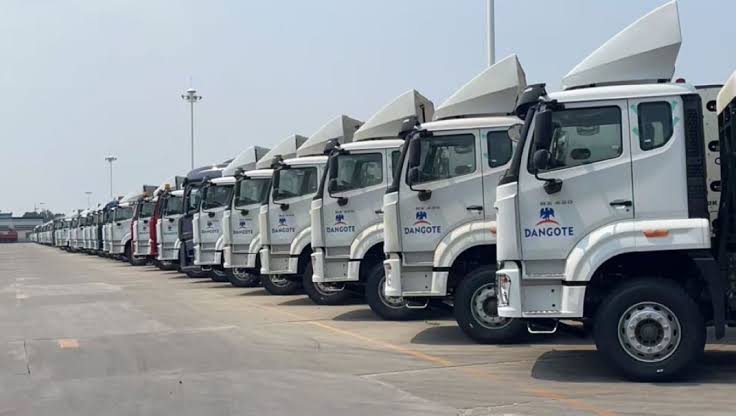
In a move aimed at revolutionizing Nigeria’s petroleum product distribution system, Dangote Petroleum Refinery has invested over N720 billion to acquire 4,000 Compressed Natural Gas (CNG)-powered trucks for nationwide delivery.
This landmark initiative, set to begin on August 15, is expected to save Nigerians more than N1.7 trillion annually by eliminating transportation costs for marketers and directly reducing pump prices.
According to a statement from the refinery, the company will absorb over N1.07 trillion annually in logistics costs, estimated at an average of N45 per litre. From mid-August, the refinery will commence direct delivery of petrol, diesel, and aviation fuel to filling stations, industrial facilities, and other large-scale consumers across the country.
The refinery aims to meet Nigeria’s daily consumption needs, which include 45 million litres of Premium Motor Spirit (PMS), 15 million litres of diesel, and 5 million litres of aviation fuel.
The strategic program forms part of the Dangote Group’s broader commitment to addressing logistics bottlenecks, enhancing energy efficiency, and promoting environmental sustainability.
The company noted that lower fuel distribution costs will help reduce production expenses, ease inflationary pressures, and stimulate national economic growth. The initiative’s investment covers the acquisition of the 4,000 CNG trucks and the establishment of nationwide CNG “mother and daughter” stations to support the distribution network.
The initiative has garnered widespread praise from industry stakeholders and government officials. The Presidency, through the Commercial Coordinator of the Presidential Compressed Natural Gas Initiative (PCNGI), Tosin Coker, described the move as a pivotal moment in the Federal Government’s push to mainstream gas-powered transportation.
He called the acquisition of 4,000 CNG trucks “impressive in scale” and “highly strategic,” saying it signals to the market that CNG is a practical solution to high energy costs, emissions, and supply chain challenges.
The Independent Petroleum Marketers Association of Nigeria (IPMAN) also lauded the development as a timely resolution to longstanding challenges in the downstream sector. IPMAN’s National Publicity Secretary, Chinedu Ukadike, stated that the new model would significantly reduce logistical burdens for independent marketers by delivering more affordable fuel directly to filling stations. He lamented that with pipelines non-functional for years, marketers have been forced to rely on expensive transport from coastal depots.
Economic experts offered strong perspectives on the initiative’s impact. Development Economist Professor Ken Ife said the program would drive down the price of PMS and yield widespread benefits for Nigerians. Bismarck Rewane, CEO of Financial Derivatives Company, dismissed concerns about the refinery becoming a monopoly, arguing that the scheme would curb the “parasitic role” traditionally played by middlemen who extract margins without investing in infrastructure. He explained that Dangote’s move achieves a uniform price across the country by eliminating bridging costs and reducing logistics expenses through the use of CNG.
Energy analyst Ibukun Phillips described the move as “revolutionary,” suggesting it could reshape Nigeria’s energy sector by improving affordability and access, particularly for consumers in rural communities who often pay more for fuel. She added that the initiative could also help revive abandoned filling stations and promote equitable distribution.
The refinery further stated that the programme is expected to create over 15,000 direct jobs across the logistics chain and will help curb the cross-border smuggling of petroleum products by creating a more efficient and environmentally friendly distribution system.