
Dangote Makes Case for ‘Africa First’ Industrial Policy to Drive Growth
By Patience Ikpeme
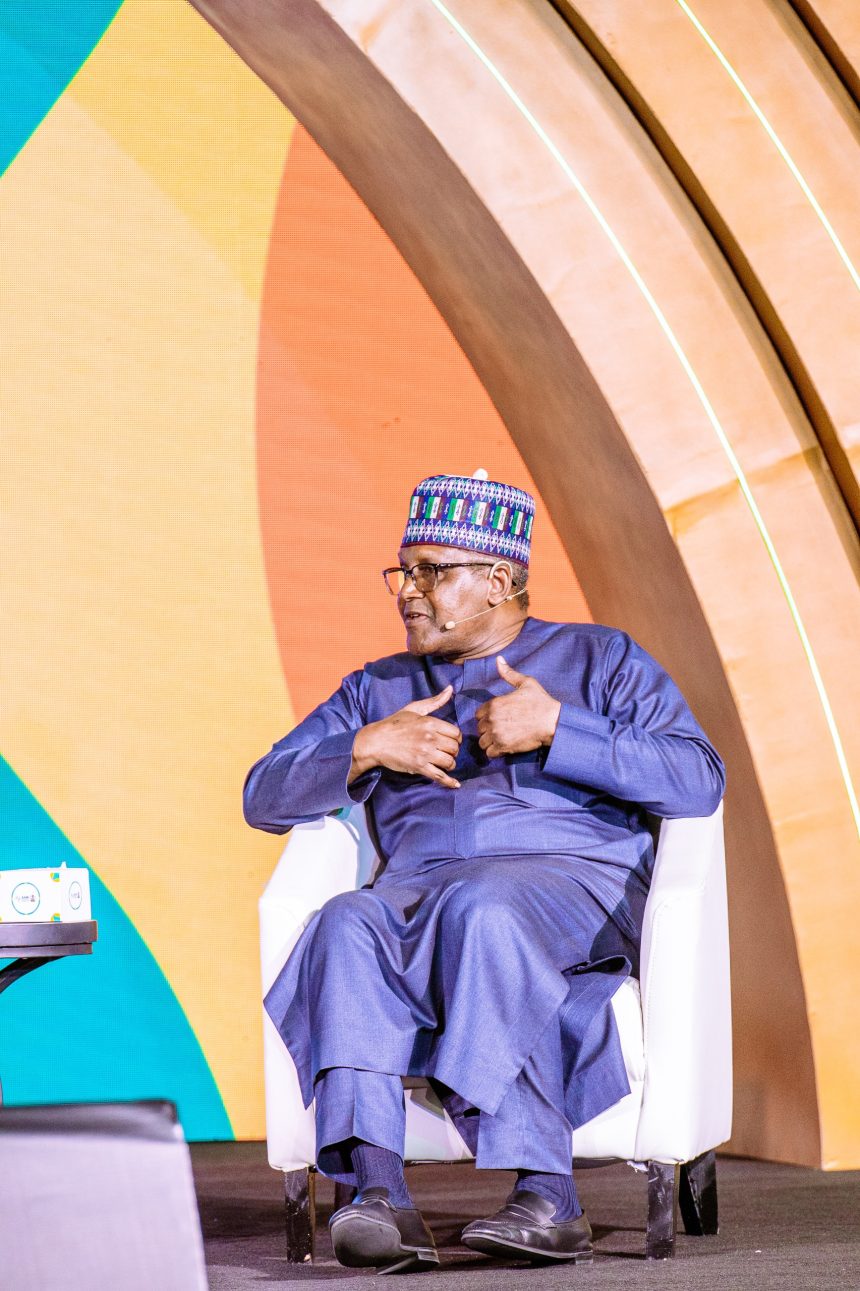
Aliko Dangote, has called on African countries to adopt a deliberate protectionist approach he termed “Africa First,” arguing that the continent’s continued dependence on imports and foreign aid exports jobs, fuels poverty, and undermines sustainable economic growth.
Africa’s richest man, while speaking at the 32nd Annual Meetings of Afreximbank in Abuja, Dangote drew on his experience as an industrialist to present a roadmap aimed at reversing Africa’s economic vulnerabilities and achieving self-sufficiency.
Dangote linked Africa’s persistent poverty to its status as a destination for foreign goods, warning that remaining a dumping ground would keep millions unemployed. “Once we remain a dumping ground, we will never be able to create jobs,” he said. Drawing inspiration from the “make America great” mindset, he argued that Africa must prioritize its own economic interests. “Since it is America first, we should also say Africa first. We should try and create jobs,” he urged, citing Asia’s economic rise as a product of local investment by entrepreneurs who kept their wealth within their borders. In contrast, Dangote lamented, “The majority of people, they take the money out of the continent.”
At the heart of his message was a call for African governments to make tough policy choices to shield domestic industries. Dangote pointed to the example of the Trump administration’s steel tariffs, which he said helped prevent the collapse of the U.S. steel industry. Without such measures, he warned, African producers would struggle to compete in an open market flooded by cheap imports, comparing it to trying to sleep with windows open to mosquitoes.
Recalling the transformation of Nigeria’s cement sector, Dangote explained that former President Olusegun Obasanjo’s backward integration policy was a decisive move that forced importers to build factories locally to qualify for import licenses. “If you don’t set up a factory, you cannot import,” he noted, describing how production surged from 1.9 million tons to over 60 million tons. As a result, Nigeria became the largest cement exporter in Africa.
Dangote’s newest cement plant, built to serve export markets, is projected to boost Nigeria’s foreign exchange earnings by at least $500 million annually.
Beyond trade policy, Dangote pointed to chronic electricity shortages and policy inconsistencies as key obstacles discouraging investment across the continent. He warned that these issues, if unaddressed, could continue to undermine efforts to industrialize.
Turning to recent projects, Dangote confirmed that his refinery has started exporting jet fuel to markets in the United States and Asia, while about 37 percent of the company’s fertilizer production is now shipped to the U.S. This, he noted, shows what can be achieved when large-scale projects are backed by strong local partnerships.
He acknowledged, however, that had he fully understood the scale of the refinery project’s challenges at the outset, he might not have attempted it, crediting local banks, particularly Afreximbank, for making the project viable.
Dangote also shared his views on corruption, distinguishing Africa’s situation from other regions. While corruption exists globally, he said Africa suffers uniquely because stolen funds are often moved abroad, depriving local economies of reinvestment.
“Our corrupt people, when they steal the money, they take it, they fly the money out of the continent,” he remarked, contrasting this with countries like Indonesia and Thailand where funds, even when ill-gotten, often stay within national economies.
Looking ahead, Dangote challenged African entrepreneurs to recognize their responsibility as central to the continent’s progress. “We African champions, we need to understand that we are the only people that can make Africa great. Nobody will do that for us,” he asserted.
For Dangote, wealth creation should be defined by building industries and creating jobs, not just by personal accumulation. He argued that a stronger base of domestic investors would naturally attract more foreign investment, saying, “Foreign investors, they just don’t come that easy. So what we need to do is to encourage domestic investors.”
Asked about foreign partnerships, Dangote shifted focus to African institutions, suggesting that expanding the reach and capacity of local banks could transform the continent’s economic prospects within a few years.
“If Africa can have ten institutions like African banks, we can turn Africa into a heaven in the next five years,” he predicted, describing trade finance institutions like Afreximbank as critical connectors for intra-African trade.
In a move aimed at improving Nigeria’s downstream petroleum supply chain, Dangote disclosed that his company has adopted a zero-charge delivery model for distributing gasoline and diesel nationwide, a step he believes will boost competition and enhance efficiency.
Finally, Dangote announced plans to list the group’s fertilizer business on the stock exchange this year and the refinery next year. He said the decision to list the refinery is intended not only to deepen the capital market but also to allow broader public participation in the business, addressing concerns about market dominance.
Through his remarks, Dangote presented a vision rooted in self-reliance, local investment, and strategic protection of African industries—an approach he believes could finally unlock the continent’s vast economic potential.