
Tinubu Demands Swift Execution of Infrastructure Projects
…Warns Against Delays

By Patience Ikpeme
President Bola Ahmed Tinubu has issued a directive for all approved infrastructure projects to transition from planning to immediate, real-time execution.
The President also cautioned against any delays caused by bureaucratic hurdles.
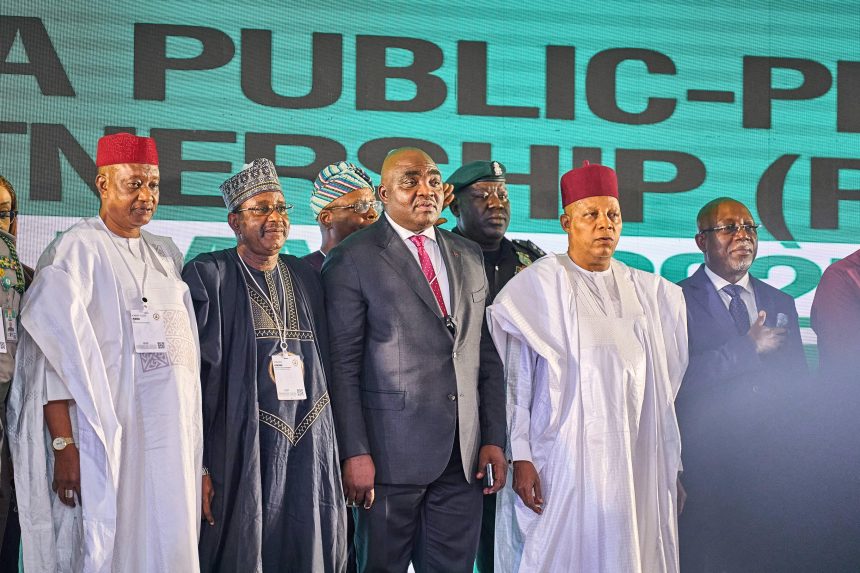
This message was delivered by Vice President Kashim Shettima at the 2025 Nigeria Public-Private Partnership (PPP) Summit held in Abuja on Tuesday.
The President revealed that the federal government plans to fast-track approvals for viable projects and intensify coordination among Ministries, Departments, and Agencies (MDAs) to ensure rapid implementation. “We will fast-track approvals for viable projects. We will ensure coordination across Ministries, Departments, and Agencies to enable swift implementation,” the president said.
He explained that Nigerians expect tangible results rather than mere promises, stressing the critical need to transform commitments into infrastructure that directly addresses citizens’ daily requirements.
“We do this because we know that what matters to the average Nigerian is not promises, but power in their homes, roads to their farms, access to clean water, modern hospitals, and quality schools. We must build. We must deliver. And we must do it together,” Tinubu stated.
President Tinubu acknowledged existing challenges within Nigeria’s project implementation culture, observing that the country’s potential has not always been matched by action. He commented, “Nigeria does not lack potential. What we have lacked, at times, is alignment of purpose and the courage to act decisively. Let us chart a new path, not just as government and investors, but as partners in nation-building.”
According to him, the current administration has taken measures to streamline bureaucratic processes and improve transparency in the public-private engagement framework. “We have aligned our processes with global best practices and investor expectations,” he said.
President Tinubu stated that a functional partnership between government and the private sector is central to national transformation. He also disclosed that the Infrastructure Concession Regulatory Commission (ICRC) has been strengthened to effectively regulate and de-risk PPP transactions. “We are determined to deliver infrastructure that is both sustainable and inclusive,” he added.
Speaking on long-term infrastructure goals, Tinubu reiterated the government’s commitment to the National Integrated Infrastructure Master Plan (2020–2043), which aims to increase Nigeria’s infrastructure stock from 30–35 percent of GDP to 70 percent by 2043. However, he cautioned, “But blueprints do not build roads. Policies alone do not generate megawatts.”
He called on private sector stakeholders to look beyond perceived risks and seize the opportunity to contribute to a rapidly transforming economy. “To our private sector partners, Nigeria offers scale, demand, and returns like no other African market. But we need more than investment. We need innovation, we need efficiency, and above all, we need integrity. I urge you to look beyond the risks and recognise the immense opportunity to shape a nation that is not just rising, but ready,” he said.
Earlier in his address, Director-General and Chief Executive Officer of the ICRC, Dr. Jobson Oseodion Ewalefoh, assured both local and international investors that Nigeria remains open for business and prepared for genuine partnership. He cited the country’s large population, expanding middle class, and significant infrastructure deficit—estimated at over $2.3 trillion—as clear indicators of the urgency and opportunity for PPPs.
“With over 200 million people, a growing middle class, rich natural endowments, and an enormous infrastructure gap estimated at over $2.3 trillion — the case for PPPs in Nigeria is not only compelling, it is urgent,” Ewalefoh said.
He added that the Commission is focused on balancing its regulatory role with facilitation and collaboration. “We are committed to ensuring that every PPP transaction is not just legally sound, but economically viable and socially impactful,” he said. Dr. Ewalefoh pledged that the ICRC will support investors from project conceptualization through to financial close and implementation.
Ewalefoh attributed the Commission’s progress to President Tinubu’s direct support and a clear mandate to mobilize private-sector funding for national infrastructure.