

Nigeria and Germany Collaborate to Shape National Hydrogen Policy
By Patience Ikpeme
Nigeria and Germany are moving forward with plans to refine the Zero draft of the Nigerian Hydrogen Policy, a crucial step towards developing a clean and sustainable energy future for the nation.
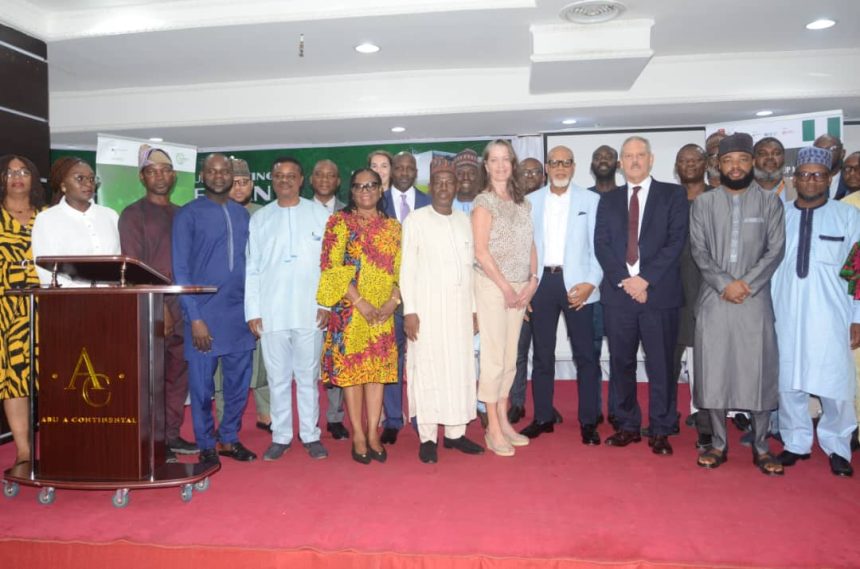
To advance this initiative, the Federal Ministry of Budget and Economic Planning, in conjunction with the German-Nigerian Hydrogen office and key stakeholders, has organized a two-day Working-Group workshop in Abuja.
The workshop’s design aimed to introduce participants to the extensive potential of hydrogen as a clean, sustainable, and efficient energy source capable of driving economic growth, improving energy security, and supporting sustainable industrialization.
Declaring the workshop open, Senator Abubakar Atiku Bagudu, Minister of Budget and Economic Planning, conveyed that the hydrogen economy represents a critical component of Nigeria’s strategy to diversify its energy mix, lessen its reliance on fossil fuels, and address climate change. He noted that by harnessing the power of hydrogen, “we can create new opportunities, drive innovations and improve the lives of our citizens.”
Minister Bagudu asserted that Nigeria possesses the core assets to become a leader in the hydrogen economy space due to its abundant renewable energy sources, which are ideal for hydrogen production.
“With strategic planning, hydrogen can become a cornerstone of our diversification agenda, reducing our over reliance on crude oil exports while unlocking new revenue streams, industrial development, regional trade and exports to the international market,” he explained.
He also stressed that the primary objective of the workshop was to gather expert feedback, constructive criticism, and valuable insights to further refine and strengthen the policy, with the goal of establishing a comprehensive framework for Nigeria’s hydrogen economy.
Ekperikpe Ekpo, the Minister of State for Petroleum Resources (Gas), represented by his Technical Assistant (Downstream) Mr. Abel Igheghe, expressed gratitude to the German government for its unwavering support in advancing Nigeria’s energy transition efforts. He described the German support as a bold vision for harnessing potentials and offering promising solutions to existing challenges.
Mr. Ibrahim Sulu, Director of Renewable Energy at the Energy Commission of Nigeria, confirmed the Commission’s participation in the hydrogen initiative from its inception and pledged its continued commitment to working with all stakeholders.
Mrs. Annett Gunther, the Ambassador of the Federal Republic of Germany to Nigeria, stated that the German-Nigerian Hydrogen office serves as an example of Germany’s dedication to providing technical expertise, capacity building, and knowledge transfer.
“We are actively exploring opportunities to enhance relationships, technology transfer and joint research initiatives in the hydrogen sector between our countries recognizing that this collaboration benefits both country’s economies,” Ambassador Gunther said.
She added that “Germany envisions deepening collaboration with Nigeria on green hydrogen across the entire value chain from production to transportation, storage and utilization.”
According to Gunther, this partnership could create a model for sustainable development that balances economic growth with environmental responsibility.
Earlier, Dr. Markus Wanger, Country Director of GIZ Nigeria and ECOWAS, welcomed participants to the workshop, stating that the stakeholder engagement marks a significant step in Nigeria’s journey towards energy transition and diversification of its energy economy.
Describing the National Hydrogen Policy draft as a milestone in advancing Nigeria’s policy and regulatory framework for the development and diversification of the energy sector, Wanger conveyed that it would form the foundation upon which a future-oriented sustainable hydrogen economy in Nigeria could be built.
Other dignitaries present at the occasion included Dr. Iniobong Abiola-Awe, Director, Department of Climate Change, Federal Ministry of Environment, and Dr. Odafe Ejenavi, Deputy Director, Nigerian Midstream and Downstream Petroleum Regulatory Authority (NMDPRA), among others.


