

Nigeria’s Foreign Reserves Soar Past $40bn, Highest in Three Years
By Patience Ikpeme
Nigeria’s foreign reserves have surpassed $40 billion, reaching their highest point in nearly three years, according to Central Bank of Nigeria (CBN) Governor, Mr. Olayemi Cardoso.
He attributed this substantial increase to two key initiatives: the implementation of an electronic matching system to boost transparency in the foreign exchange market, and the introduction of a foreign exchange code of ethics, which all Nigerian banks have committed to uphold.
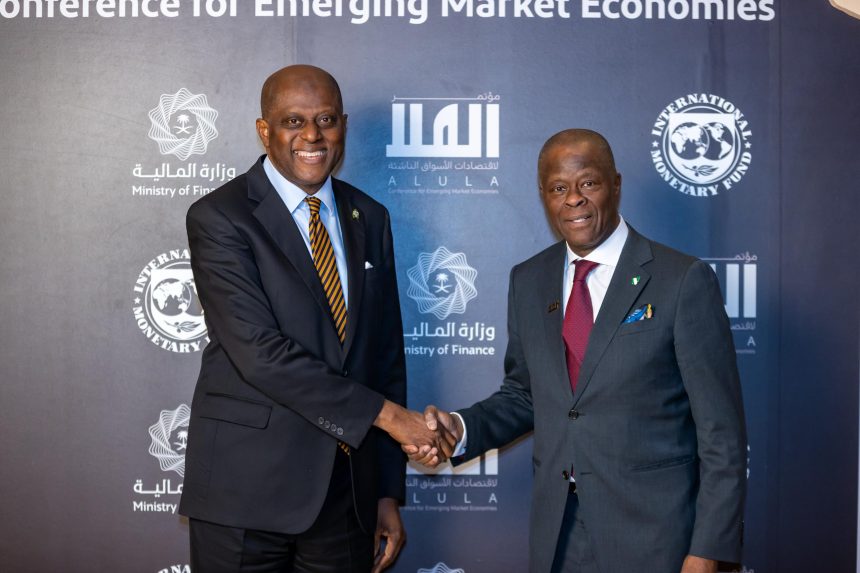
Mr. Cardoso made this disclosure at a meeting with Talal Al-Humond, the Assistant Governor for Monetary Affairs at the Saudi Arabia Central Bank (SAMA), on the sidelines of the inaugural Conference on Emerging Markets Economies in Riyadh. The conference was organized by the Saudi Ministry of Finance and the International Monetary Fund (IMF) Regional Office.
During their meeting, Cardoso noted the importance of stronger economic ties with the Middle East and the Nigerian diaspora community in the region. He expressed Nigeria’s interest in learning from Saudi Arabia’s successful approach to infrastructural development and tourism.
He specifically noted Saudi Arabia’s commitment to economic diversification through innovative environmental projects, large-scale transformations, and tourism investment as crucial lessons for Nigeria’s own development.
Cardoso also reiterated his commitment to working closely with the Nigerian diaspora community in the Middle East to increase remittance flows and strengthen Nigeria’s financial sector. He assured that the CBN will continue to improve key economic indicators to create a favorable environment for private sector growth and job creation.
Mr. Al-Humond, representing the Saudi Central Bank, pledged to collaborate with the CBN to achieve shared goals.
Speaking at a panel discussion moderated by Jihad Azour, the IMF’s Director for the Middle East and Central Asia Department, Governor Cardoso discussed Nigeria’s financial market reforms, which have addressed distortions in the foreign exchange market. He noted the significant reduction in the gap between official and parallel market exchange rates, from as high as 60% to approximately 4-5%, thanks to consistent policies, improved market confidence, and increased transparency in foreign exchange trading.
Governor Cardoso acknowledged the significant economic challenges Nigeria has faced, including capital outflows, multiple exchange rates, currency depreciation, high inflation, and a backlog of foreign exchange transactions, which eroded trust in the Nigerian currency. He explained that upon assuming office, his team prioritized restoring market confidence by tackling the backlog of foreign exchange transactions and demonstrating a commitment to economic stability.
He outlined the CBN’s tight monetary policy stance to combat inflation and restore macroeconomic discipline, including raising interest rates by 850 basis points over the past year and moving away from quasi-fiscal interventions that had distorted the economy. He emphasized that Nigeria’s approach has been consistently based on standard monetary policies.
Another major reform highlighted by Governor Cardoso was the removal of the fuel subsidy, which, along with multiple exchange rate inefficiencies, had cost Nigeria approximately 6% of its GDP annually. He acknowledged the political difficulty of removing the subsidy in the past, but emphasized its positive impact on Nigeria’s fiscal outlook.
He also explained the CBN’s mandate for banks to recapitalize, strengthening the financial system and building resilience against future economic shocks.
Addressing the global economic climate, Mr. Cardoso stressed the importance of tailoring policies to each country’s specific needs. He cited Nigeria’s decision to tighten monetary policy even when global trends suggested otherwise, a decision that has since been recognized as correct given Nigeria’s specific economic circumstances.
On financial inclusion, Governor Cardoso highlighted Nigeria’s progress, with a current rate of 74%, and emphasized the need for further expansion to ensure that economic growth benefits all segments of society. He identified digitalization, particularly mobile money services, as a key driver of financial inclusion, along with leveraging technology and prioritizing gender-focused initiatives.
He reaffirmed the CBN’s commitment to maintaining macroeconomic stability, policy consistency, and long-term resilience for the Nigerian economy.
The two-day conference, held in Al Ula, Saudi Arabia, from February 16-17, 2025, provided a platform for policymakers and experts to discuss structural changes in the global economy and their impact on emerging markets.


