

Dangote Refinery Exports Jet Fuel to Saudi Aramco, Expands Global Reach
By Patience Ikpeme
Dangote Petroleum Refinery has successfully exported two cargoes of jet fuel to Saudi Aramco, the world’s largest oil producer, marking a significant milestone in Nigeria’s emergence as a key player in the global petroleum market.
The President of Dangote Group, Aliko Dangote, disclosed this on Tuesday during a visit by the Nigerian Economic Summit Group (NESG) to the Dangote Fertiliser Limited and the Dangote Petroleum Refinery & Petrochemicals complex in Ibeju Lekki, Lagos.
Dangote attributed the refinery’s ability to enter the international market, particularly with a company of Saudi Aramco’s stature, to its world-class standards and advanced technology.
“We are reaching the ambitious goals we set for ourselves, and I’m pleased to announce that we’ve just sold two cargoes of jet fuel to Saudi Aramco,” Dangote said.
Since commencing production in 2024, the $20 billion Dangote refinery—the world’s largest single-train refinery—has steadily ramped up operations, now refining 550,000 barrels of crude oil per day.
NESG Chairman, Mr. Niyi Yusuf, lauded Dangote’s achievements, describing the refinery as a transformational project that aligns with Nigeria’s aspirations of becoming a $1 trillion economy.
“To achieve this, significant domestic investments like the Dangote refinery are essential. This refinery, fertiliser plant, petrochemical complex, and supporting infrastructure are monumental,” Yusuf said. “You have dredged 65 million cubic tonnes of sand to create a future for the country.”
He emphasized the importance of industrialization in boosting Small and Medium Enterprises (SMEs), reducing dependency on foreign imports, and fostering national economic growth.
“It’s unacceptable that a country of over 230 million people still relies on imports to meet its basic needs. We must support our entrepreneurs to become global players,” Yusuf added.
He commended Dangote for transforming Nigeria from a net importer of petroleum products to a net exporter, describing the refinery as a symbol of bold vision and perseverance.
“This refinery represents the audacity of courage. It takes immense effort to do what you’ve done and still be standing and smiling. You’ve proven that the private sector can drive real change,” Yusuf said.
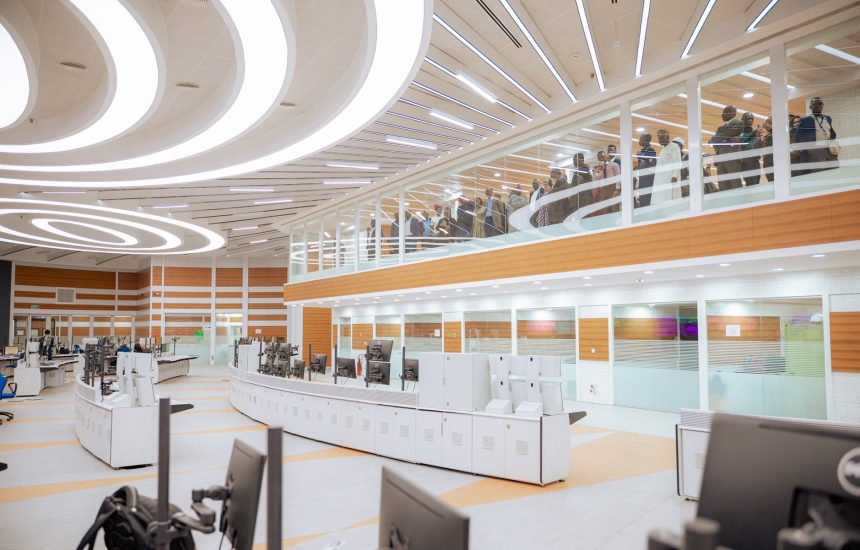
During the visit, NESG board members and stakeholders toured the refinery and fertiliser plants, praising the advanced technology and expertise of young Nigerian engineers managing world-class laboratories and central control units.
In his remarks, Dangote reiterated the crucial role of the private sector in national development, stressing that Nigeria’s economic challenges could be addressed by creating employment opportunities.
He cautioned against using the concept of a free market as an excuse for continued import dependence, noting that developed nations like the U.S. and China actively protect their industries to safeguard jobs and promote self-sufficiency.
Dangote cited the Benin Republic as an example of strategic economic protection, pointing out that despite his personal ties with the country’s president and the proximity of his Ibese cement plant, Benin restricts cement imports to protect its local industries.
“The government stands to gain when the private sector thrives. At Dangote Cement, 52 kobo of every naira generated goes to the government,” he noted.
He also highlighted the immense challenges investors face in Nigeria, particularly the need for heavy capital investment due to inadequate infrastructure.
“Private investors are forced to take on responsibilities such as power, roads, and ports—services that should be provided by the government,” Dangote said.
Despite these hurdles, he expressed confidence in Nigeria’s economic potential and reaffirmed his commitment to driving industrial growth and self-sufficiency in key sectors.